
Guide
What to Write in a Book for a Child, So It Still Means Something When They Read It Alone
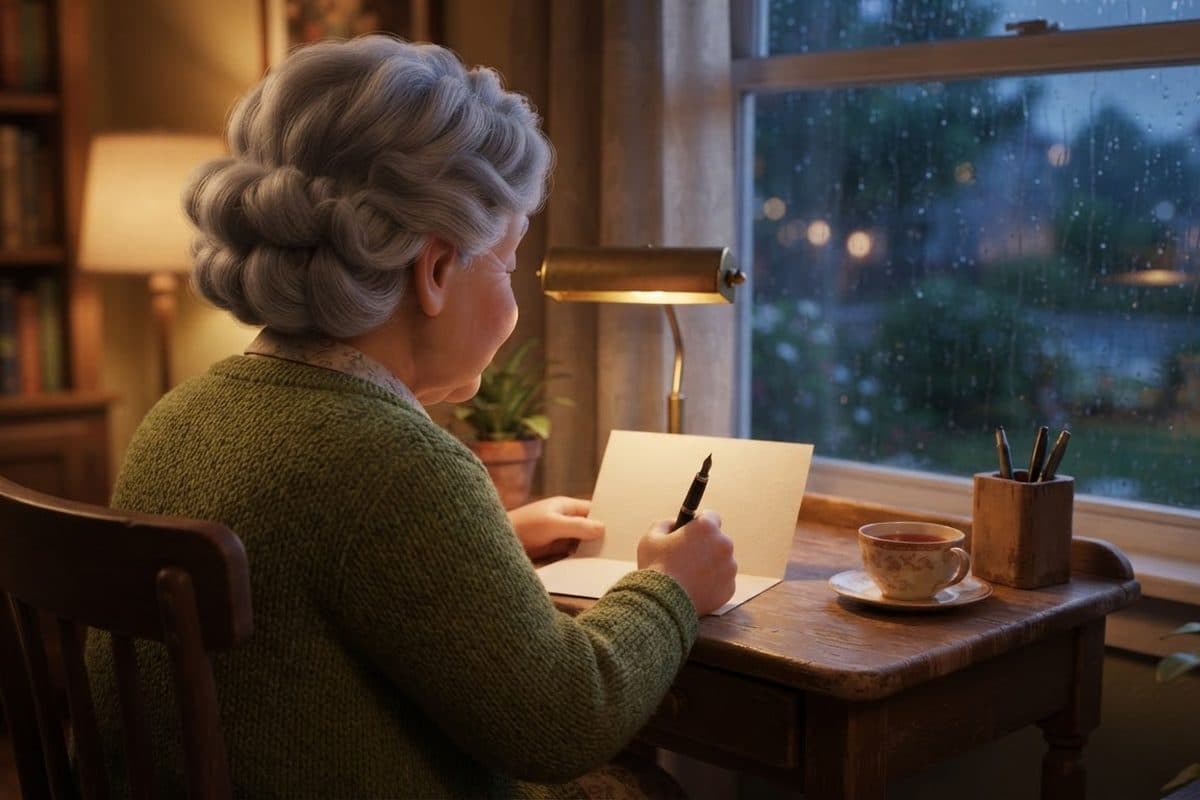
If you are at the kitchen table with a pen and a wrapped book, wondering what to write in a book for a child, the answer is shorter than the lists of a hundred quotes make it look. The note does not have to be clever. It has to say who gave the book, when, and why, in words the child will understand later.
Later is the part that is easy to miss. An inscription gets read twice: out loud on the day, by an adult, and years afterward by the child alone, who finds a page of handwriting that is about them.
Below: the four things every inscription needs, forty examples sorted by giver, occasion and age, what to leave out, where in the book to write it, and the baby shower custom. We make storybooks with a printed dedication page, so there is a section on that too, limits included.
Why a book inscription gets read twice
The first reading is the one everybody pictures: an adult opens the cover and reads your note out loud, while the child waits to get to the pictures.
The second reading is the one that lasts. Years later the child finds the book again, on a shelf or in a box during a move, and by then nobody remembers which birthday it was, who Aunt Jen was, or why this book. Only the inscription can say.
People who deal in old books take this seriously. In a checklist from the International League of Antiquarian Booksellers, the book historian David Pearson defines provenance as all the evidence of how a book has been owned, used and passed on through the generations, inscriptions included. Every copy of an edition is meant to be identical; what makes one copy unlike the others is what happened to it afterward. Books, he writes, come to life "not so much when they are printed, but when they are owned."
Time also changes what a note is worth. A gift inscription usually lowers a modern first edition's value to a collector, yet with old books, the same checklist notes, the trade now values ownership marks of every kind, not only famous ones, and a copy with its owners' writing in it often fetches more than an unmarked one. Families work the same way: the ordinary line becomes, years later, the record of who loved this child, and when.
The four things every inscription needs
A book inscription for a child that is worth keeping answers four questions. Leave one out and the note still works on the day, but the later reader is left guessing.
- Who it is to, and who it is from. Their name as they will know it at twelve, yours as they call you, and the relationship if it will not be obvious later: "Love, Nonna (your dad's mom)".
- When. The date with the year, and their age or the occasion. It is the easiest line to skip and the only one nobody can add afterward.
- Why this book. One sentence: they asked you what the moon is made of, it was your favorite at their age, you read it to their mother.
- One true thing, or one wish. Something specific about them now, or one hope that sets no target. "You laugh before the joke is finished" gets reread; "you are special" gets skimmed.
If you only have room for one of the four, make it the date: it is what lets a book be placed in a life.
In our storybooks the dedication is the one page you write yourself, and you can draft it while you look at your child drawn as the character, free, from one photo.
What to write, depending on who you are
The four parts never change. What changes with the giver is the one thing only you can say, and how much the note has to explain about you.
| Who is giving it | What only you can say | A line to adapt |
|---|---|---|
| Mom or Dad | This year, in detail nobody else saw | "You learned to whistle in April and did not stop until June. We loved every note. Mom and Dad" |
| A grandparent | Where the family comes from; you at their age | "I read this to your dad when he was five, in the same chair. Now it is yours. Love, Grandma Ruth" |
| A godparent | Why you were chosen, and that you will stay | "Your parents asked me to look out for you, and I said yes before they finished asking. Your godmother, Jen" |
| An aunt or uncle | Adventures, and the rules that bend at your house | "For the next time we build a fort and tell nobody. Uncle Dev" |
| An older brother or sister | Something only a sibling knows | "You can borrow this one. Only this one. Love, Sam, age 9" |
| A family friend | Who you are, so they can place you later | "From Lisa, your mom's friend since college, who held you when you were three days old" |
| A teacher | What you saw them do in class | "For the reader who always found the page first. Ms. Patel, first grade" |
Two rules follow. The further you are from the child's daily life, the more the note must say who you are: a parent signs "Mom", a family friend writes a full name and how they know the family. The closer you are, the more specific you can be.
From both parents, let one write and both sign; a note by committee sounds like a greeting card. From a child to a sibling or a cousin, let the child write it, spelling and all: the wobbly letters are evidence of an age.
What grandparents write in a book for a grandchild
A grandparent's inscription carries something no other one does: the family as it was before the child arrived. It may be one of the few places a grandchild finds your handwriting when they are grown, so give it more than "Love, Grandma".
Put in what only you have: something about you at their age ("When I was seven I read under the covers with a flashlight too"), a word only your family uses, and both your names, because "Gigi" means nothing to a great-grandchild who finds the book.
- For a new grandchild: "Welcome to the family, Theo. You arrived on a Tuesday in May and the whole house changed its schedule for you. Grandma and Grandpa"
- For a first grandchild: "You made us grandparents, Ava, a job we had been practicing for without knowing it. Love, Nana"
- For a granddaughter: "For Ruby, who notices the things other people walk past. Love, Grandpa"
- For a grandson: "For Owen, who is gentle with small animals and smaller cousins. Love, Nonno"
- From far away: "Read this when you miss me. I will be reading my copy too. Love, Grammy, in Phoenix"
A grandmother can also be in the book. Our personalized book for grandma, The House That Remembers, is one slow afternoon at her house, with grandchild and grandmother each drawn from their own photo and together on every page. She can order it herself and write the dedication, which we print word for word.
For a grandfather, our personalized book for grandpa, The Unfinished One, puts him in the story among the small wooden animals in his shed, for ages 4 to 9, and he can order it himself too. For the present itself, see gifts for grandchildren; for a gift going the other way, gifts for grandma from grandchildren.
What to write for the occasion
The occasion gives you the date line for free. Beyond that, each one has a thing worth saying that the others do not.
| Occasion | What to put in | A line to adapt |
|---|---|---|
| Birthday | The age, and one thing they did this year | "For Leo at five, the year you learned to ride without training wheels. Happy birthday. Dad" |
| Christmas | The year, and the tradition it starts | "Christmas Eve, 2026: the first story of the night, every year from now on. Love, Mom" |
| First day of school | That they are ready, and who is at pickup | "For Isla, starting kindergarten. You are ready, and we will be at the gate at three. Love, Mom" |
| A new baby in the family | That their place has not changed | "For Eli, who became a big brother this week. You were ours first, and you still are. Mom and Dad" |
| Baptism or christening | The date, and who stood with them | "For Grace, on the day of your baptism, June 7, 2026. Your godfather, Michael" |
| Preschool or kindergarten graduation | What they can do now that they could not do in September | "Last fall you could not read your name. Now you can read this whole note. Love, Grandma" |
| A hard week | That this is a book for the good days too | "For the waiting room, and for every room after it. Love, Aunt Kim" |
| Just because | The ordinary day you are marking | "For no reason, on a Tuesday, because you asked me what a volcano is. Uncle Ray" |
Each occasion has its own gift guide: birthday gifts that get kept, books for starting kindergarten, gifts for a new big brother or sister, and christening and baptism gift ideas.
For a birthday, our personalized birthday book prints the age they are turning into the verses, leaving the dedication free for the one thing they did this year. You can see your child drawn as the character first.
Write for the age they are, and the age they will be
A note for a three year old and one for a nine year old are different jobs, and not only because one of them can read.
- Under two. The note is for the parents now and the child much later: write to the child anyway, and give the date and who you are more room.
- Three to five. It will be read to them, so write it to be heard: short sentences, their name early, and one detail they will recognize, like "for the girl who sings to the dog".
- Learning to read. They will try to read it themselves. Print clearly, keep the words short, and write their name in full: finding it in somebody else's handwriting is a small thrill at six.
- Reading on their own. You can say more, and ask them something: "Which part would you have changed? Tell me next time."
- Ten and up. Write to them as a person: no baby names, no "little". The cute line is the one most likely to make a teenager wince.
One test covers every age: read the note as the child will at twelve. If it still makes sense and still sounds like you, it is right.
When the child is going through something
Some books arrive in a hard week: a new sibling, a move, a parent away, a hospital stay, a death in the family. The note matters more then, and is easier to get wrong.
- Write about what stays the same, not about the change: "We still read every night, wherever we live."
- Do not tell them how they feel. "I know you are sad" may not be true yet, and the book will outlast the feeling.
- Leave out what they may not know, a diagnosis, a divorce, a reason: one day they will read it alone.
- Let it be a book for good days too, so it does not become a reminder of the bad week.
If a parent is deployed, the note can come from them, written before they leave; books about deployment for kids covers the rest. For a baby on the way, see books for a new big brother or sister.
What not to write
When an inscription goes wrong, it tends to be for one reason: it was written for the day instead of for the reader who finds it later.
- Jokes that need the room. In ten years nobody will remember the setup.
- Pressure. "Future doctor", "make us proud". A target reads very differently to a struggling fourteen year old than it did at the party.
- Comparisons. "Just like your sister." Siblings read each other's books.
- Their body or their looks, even kindly. "Our little chunk" is sweet at one and painful at thirteen.
- Promises you may not keep. "I will read this with you every year" becomes the line that hurts if you do not.
- The adults' feelings. A paragraph about how fast time goes is a note to the parents.
- Slogans. "World's best grandson" says nothing about this grandson.
Religious wording is fine if it fits you and the family; if you are not sure, a plain wish is always welcome.
And if your handwriting is the problem rather than your words, in our books the dedication is typed and printed, so you can write it, read it back and fix it before anything is printed.
Where to write it, and with what
Booksellers call the first loose page inside the front cover the front free endpaper, and in a guide for book collectors, Empty Mirror's founder Denise Enck calls it the most common place for a gift inscription.
- If that page is dark or patterned, use the first light page you come to.
- Draft it on scrap paper first. A book has no delete key.
- Test the pen on similar paper, to see whether it smears or shows through.
- Let it dry before you close the book, or the ink prints onto the facing page.
- Print if your handwriting is hard to read, and write the date in full: a bare "12/3" will mean nothing in twenty years.
- Sign with both names if the one they call you is a nickname.
One exception: leave a signed first edition or any collectible book clean, because a gift inscription usually lowers its value. Enck suggests tucking a note between the cover and the first page instead, on acid-free paper so it does not damage the book over time.
The baby shower book, instead of a card
Some baby shower invitations ask guests to bring a book instead of a card, with the note written inside, so the baby starts life with a small library of messages from everyone who was there.
The first readers will be the parents. The American Academy of Pediatrics encourages reading aloud from birth through at least kindergarten, so a shower book may be read at bedtime long before the child can read your note.
- Write to the baby by name, or to "little one" if the name is still a secret, and add the date of the shower.
- Say who you are to the family: the child will not properly meet most of the guests for years.
- Keep one line for the parents, at most, and say why you chose the book.
We do not make a book for a newborn, so here we would send you to a sturdy board book and a good pen.
Short lines you can borrow
Sometimes one line is all the page needs. Change the details until they are true.
- "For the girl who asks why. Never stop."
- "For the boy who reads under the covers. We know. Keep going."
- "This was mine at your age. Now it is yours."
- "For the nights I am not there to read it to you."
- "For every time you need to be a little braver."
- "You were four when I gave you this. Read it again at fourteen and tell me what changed."
- "For the next rainy Saturday, and the one after that."
- "From one bookworm to a smaller one."
- "For the moments you feel small: you are not."
- "Merry Christmas, from the one who wraps presents badly."
- "Five years old, and worth every one of them."
- "For Grandpa's favorite reading partner."
- "Welcome to the world. Here is your first story."
Add the date and your name, and any of them is complete. Or start a book with a single photo and type the line into its dedication box.
When the dedication is printed, not handwritten
Every one of our personalized books for kids has a dedication page: you type it while you make the book, and we print it word for word on its own page at the end, after the story. That solves the handwriting, not the question of what to say.
- Up to 180 characters, with a counter under the box: about thirty words, enough for all four parts.
- We set the lines: centered, and broken to fit the page.
- Letters, not symbols. Hearts and emoji disappear as you type, because our print fonts cannot draw them; accented letters stay, so José comes out right.
- Leave it empty and we print ours, written for that story with your child's name in it, and shown to you before you decide.
- Change it in the cart until you check out.
Our own dedications, with a name filled in, are yours to borrow:
- The House That Remembers: "For Ava, who asked, and got the whole afternoon."
- The Peg With Your Name On It: "For Leo, on the first day, and every one after it. They kept a place for you."
- The Birthday Star: "For Mia, who is five now, and who was worth every single year."
- The Smallest Knight: "For Sam, who was never too small to ask the braver question."
- The Unfinished One: "For Ben, who is not finished yet, and had better not be. Grandpa"
- The Last Present: "For Noah, who worked out what the last one is for. Merry Christmas."
What it is not: your handwriting. It is printed in the book's own lettering, so if your handwriting is part of the gift, tuck a card or a slip of acid-free paper inside the cover. What it is: a custom storybook from your photo, your child drawn as the character with the same face all through the story, in the look of a modern 3D animated film, and checked by a real artist before printing. Try it with one photo; for Christmas, order by December 1.
One last check before you write it in pen
Read it once more, out loud, and check:
- The name is spelled their way, and it is the one they will still use at twelve.
- There is a date, with the year, and an age or an occasion so the date means something.
- Your name is one they will recognize later, with your relationship if it is not obvious.
- There is one specific thing that only this child did, or only you would say.
- Nothing in it needs the room to make sense, and nothing sets a target or compares them with anyone.
- It sounds like you. If you would not say it across the kitchen table, change it.
If you are still stuck, finish this sentence and stop there: "This year I noticed that you..."
For what makes the whole book a keepsake, not a name printed on a generic story, see our guide to custom children's books. And if the book is one with the child drawn into it, the dedication box comes a few steps after the free preview.
Sources
- ILAB Provenance Research Checklist for Antiquarian Booksellers · International League of Antiquarian Booksellers (ILAB), 2025
- Should you write a gift inscription in a first edition or collectible book? · Empty Mirror (Denise Enck), 2012
- Beyond Literacy: Shared Reading Starting at Birth Offers Lifelong Benefits · HealthyChildren.org, American Academy of Pediatrics
Questions parents ask
What do you write inside a children's book as a gift?
Four things: the child's name and yours as they call you, the date with their age or the occasion, one sentence on why you chose this book, and one specific thing you love about them or wish for them. Keep it to three or four sentences in plain words, because the child will reread it alone years later, when the occasion itself is long forgotten.
Should you write in a book you give as a gift, and where?
Yes, for a child's book the inscription is what makes that copy theirs. Write it on the front free endpaper, the first loose page inside the front cover, which is the usual place for a gift inscription. If that page is dark or patterned, use the first light page. The exception is a collectible book: tuck a note inside on acid-free paper instead.
What do grandparents write in a book for a grandchild?
Something only a grandparent can give: what you were like at their age, a word or saying from your side of the family, or the story of where the book came from. Add the date, their age, and both your names, the one they call you and your real one, so a grandchild reading it at twenty knows exactly who wrote it.
What are some positive things to write to a granddaughter or grandson?
Describe something they do rather than something they are: "for Ruby, who notices the things other people walk past", or "for Owen, who is gentle with small animals". Words like beautiful or smart are kind but forgettable. A specific observation tells the child they were really seen, and it is the line they will reread as a teenager.
What is an inspirational message for grandkids?
One that encourages a habit rather than setting a goal: be curious, be kind, keep asking questions, keep reading under the covers. Messages about future success, such as becoming a doctor or making the family proud, can read as pressure years later. A short line about who the child is now, signed and dated, lasts longer than a famous quotation.
What do you say when you give someone a book?
Say why you chose it. "I read this when I was your age" or "this made me think of the way you ask about the stars" turns a book into a message. With a small child, offer to read the first pages together right away. Then let the inscription say the same thing in writing, with the date, for when they find it later.
What is a good short message to write in a book?
One line plus the date and your name is enough: "This was mine at your age, now it is yours", "For the nights I am not there to read it to you", or "For the girl who asks why: never stop". The short messages that last name one specific thing about the child or the book, and the year lets the child place the line later.
What do you write in a book instead of a baby shower card?
Write to the baby by name if it is known, or to "little one" if not, and say who you are to the family, why you chose the book, and the date of the shower. One line for the parents is fine, but keep the rest for the child, who will hear it read aloud long before they can read it themselves.
Does writing in a book lower its value?
For a collectible book, usually yes: a gift inscription in a first edition generally lowers its value to collectors, so tuck a note inside it instead. For an ordinary children's book it is the opposite for the family, because the inscription is what makes that copy different from every other one. With old books, the trade itself now treats ownership writing as part of a copy's history.