
Choosing a book
Princess Books for Kids: The Best Ones by Age, for the Princess Phase and Beyond It
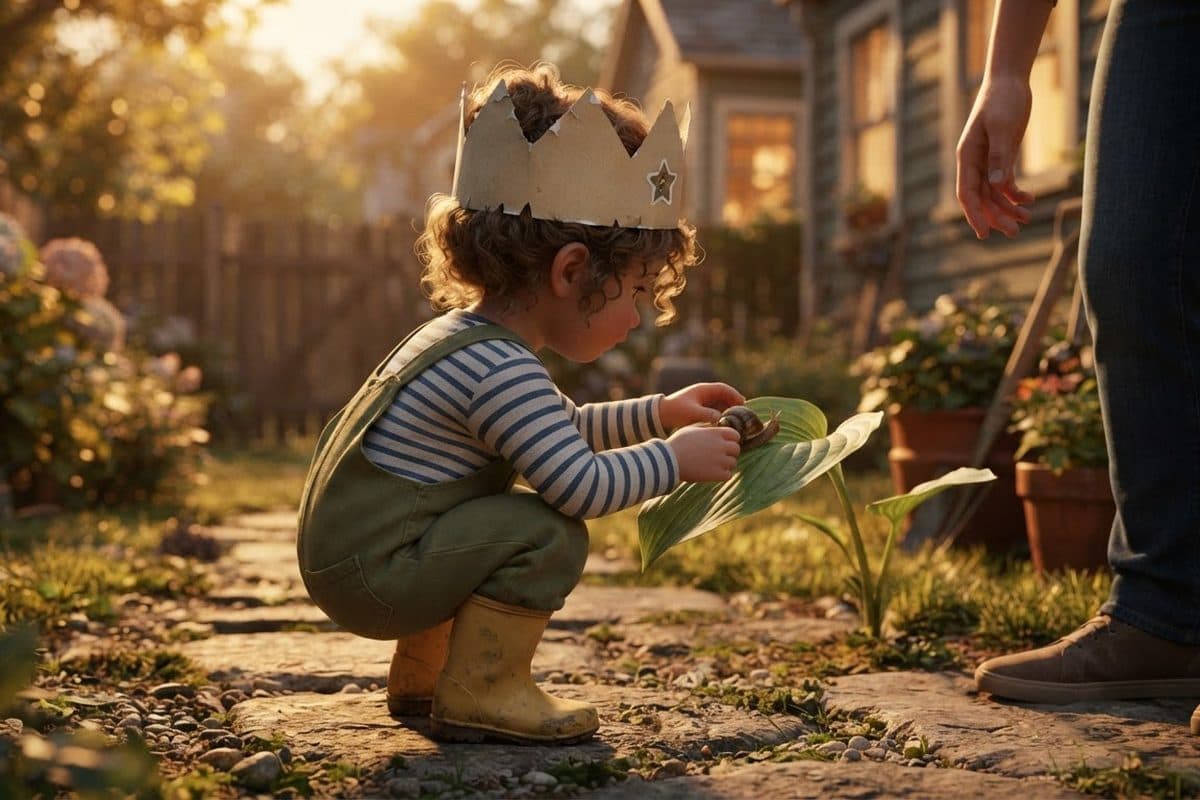
Most parents looking for princess books for kids did not choose the princess. A film did, usually a Disney one, and then a birthday party, a costume and a cousin's old gown finished the job. Suddenly every towel is a cape, the gown goes to the grocery store, and bedtime needs a tiara. That is the princess phase. It is normal, it is often lovely, and it passes on its own schedule, not yours.
What worries most parents is not the sparkle. It is the plot: a princess who waits, gets rescued and marries at the end. You do not have to choose between that and a lecture. The better move is simpler, and the books below make it for you: keep the princess, and change what she does.
Below: when the princess phase starts and ends, what the research on Disney princesses found, when the official Disney books are the right pick, princess books by age from 2 to 9, picks for boys, and a table for the library. Every title was checked with its publisher, a library or a bookseller in September 2026. We make personalized books, one of them a princess story, so we are not neutral, and we say where ours fits.
The princess phase: what it is, and why it is fine
Researchers have a name for its most visible part. The developmental psychologists May Ling Halim and Diane Ruble call it the pink frilly dress phenomenon: the stretch when a girl will only leave the house in something very feminine, even over thick leggings in freezing weather. In one of their studies, which interviewed the parents of 76 children aged three to seven, more than half of the girls had been through it, especially the three and four year olds, and about a quarter never had. About a quarter of the boys had their own version, mostly refusing anything that looked feminine, sometimes a suit and tie or a superhero costume, and it was more common later, at five and six.
The timing is no accident. According to the American Academy of Pediatrics, most children can label themselves a boy or a girl before their third birthday and have a stable sense of it by four. The princess arrives right on schedule: Halim and Ruble found that the children who cared most about being a girl or a boy, and the three and four year olds who already understood that it would not change, were the likeliest to insist on the clothes. It is a child trying on an identity, literally.
It also tends to loosen with age. In a study that followed 229 African American, Dominican and Mexican American children from three to five, more than half of the girls played dress-up at least once a week across those years, most often as princesses, and how girlish or boyish the children's outfits looked had begun to ease by five. In the long-term studies of five to ten year olds that Halim and Ruble review, rigid ideas about what girls and boys may do peaked around five or six and loosened sharply by seven or eight, though they note that findings are mixed.
What the research on Disney princesses actually found
The studies most parents have half heard about come from one team, led by the developmental psychologist Sarah Coyne at Brigham Young University, and they point two ways.
The first, in 2016, followed 198 preschoolers for about a year: more engagement with Disney princesses went with more stereotypically feminine behavior a year later. For boys, the university's summary added better body esteem and more helpful behavior, but the paper found those only among boys whose parents often talked with them about what they watched.
The follow-up, in 2021, surveyed more than 300 children in preschool and again five years later. In the published paper, early love of princesses was not linked to sticking more closely to female stereotypes later on; it went with higher body esteem and less adherence to hegemonic, or toxic, masculinity, and the university's summary adds more progressive views about women. The effects were small to moderate, and they differed by gender and by socioeconomic background.
These are associations from one research group, not proof, and the researcher's advice was simple: let princesses be one of many things a child loves, and talk about who each princess is, not just how she looks. Nothing in any of it says take the films away. It says keep talking and widen the shelf, which is the rest of this page.
The official Disney princess books, and when they are the right pick
If your child loves one princess in particular, a book with that princess in it is often the right book, and nothing to apologize for. A book a child asks for by name gets read, and reading together is what does the work. Random House and Disney's own imprint publish the best-known lines, in three useful sizes:
| The line | Ages the publisher lists | Best for |
|---|---|---|
| Disney Princess Little Golden Books, from Random House | 2 to 5 | The favorite film, retold short enough for bedtime |
| Step into Reading, Disney Princess, from Random House | 4 to 6 for The Little Mermaid, a Step 2 reader | A new reader who will sound out anything with Ariel in it |
| 5-Minute Princess Stories, from Disney Books | 6 to 8 | Twelve princesses, one short story a night |
The Little Golden Books and the reader retell the films, and the treasury sends the princesses on short new adventures. Either way, what you add is the conversation, and a child who has seen the film ten times is an expert who likes being asked.
If you are hoping for a Disney book with your child's name inside, we went through what the licensed personalized Disney books personalize, and what none of them can do. And if what your child really wants is to be the princess rather than read about one, you can see them drawn as a character first, free.
What makes a princess book worth reading
Beyond the Disney shelf, the princess books that last share a handful of traits. None of them asks the princess to stop being a princess.
- She wants something. A princess with a goal of her own, a pony, a knighthood, a quiet afternoon, is a character. One who only waits is scenery.
- She does something about it, with her wits, her nerve or her kindness. The doing is where a child learns what a princess can be.
- The crown is for what she does. The gown can stay, and often does. It is just not the reason anyone admires her.
- The prince is not the prize. He can be a friend, a sidekick or a disappointment. A wedding as the reward for being pretty is the one plot worth skipping.
- It is funny. Children remember what makes them laugh, and ask for it again.
- No moral on the last page. If the book explains what we learned, it did not trust its own story.
Princess books for 2 to 4 year olds
At this age the plot barely matters. What works is short, rhythmic and physical: a princess doing the things a toddler does, a word to shout, a crown to put on while you read.
- Princess Baby by Karen Katz. A board book, listed for ages 2 to 5, about a baby who turns down every nickname anyone gives her, with a curtsy and a twirl, until the reader is cheering the name she wants. There are two more, Princess Baby, Night-Night and Princess Baby on the Go.
- Do Princesses Wear Hiking Boots? by Carmela LaVigna Coyle, illustrated by Mike Gordon and Carl Gordon. A girl asks her mom whether princesses ride tricycles, climb trees and do chores, and the answer is that being like a princess has to do with what you are on the inside. The board book edition is listed for ages 2 to 6.
- A Disney Princess Little Golden Book, for the child who wants her own princess and nobody else's.
The best princess book at two or three is often the one you read in costume. Hand over the crown and let your child be the princess while you do the voices. The general shape of what works at this age is in best books for 3 and 4 year olds.
Princess books for 4 to 6 year olds: brave, clever and kind
Four to six is when the princess phase meets real stories, and the age when the right book does the most: a child can now follow a real problem and enjoy a princess who solves it.
- The Paper Bag Princess by Robert Munsch, illustrated by Michael Martchenko. First published in 1980 and listed by its publisher for ages 4 to 7: a dragon smashes Princess Elizabeth's castle, burns her clothes and captures Prince Ronald, so she puts on a paper bag and goes after them with nothing but her wits. The ending is famous, and we will not spoil it.
- Princess Smartypants by Babette Cole. She has no intention of getting married, so when the family pressure mounts she sets her suitors impossible tasks. Listed for ages 4 to 8.
- Not All Princesses Dress in Pink by Jane Yolen and Heidi E. Y. Stemple, illustrated by Anne-Sophie Lanquetin. Princesses in mud puddles and team jerseys, climbing trees with their tiaras still on: for the child who loves the crown and hates staying clean.
- Princess Truly in I Am Truly by Kelly Greenawalt, illustrated by Amariah Rauscher. A rhyming celebration of a girl with magical, sparkling curls. Her series continues into early readers.
- The Princess and the Pony by Kate Beaton. Princess Pinecone wants a big, strong warrior's horse for her birthday and does not quite get one. It is laugh-out-loud funny, and it ends up being about loving the pony you got.
- Interstellar Cinderella by Deborah Underwood, illustrated by Meg Hunt. A Cinderella who dreams of fixing rockets, a fairy godrobot, and a prince whose ship breaks down.
If you want one princess on the shelf who looks exactly like yours, see your child drawn from one photo first, free.
Princess books that aren't about being rescued
The plot parents worry about is old and simple: the princess is in trouble, a prince arrives, and the wedding is the reward. Good princess books flip it in one of three ways.
- She does the rescuing. Elizabeth goes after the dragon in The Paper Bag Princess, and in Interstellar Cinderella it is the prince who needs a mechanic.
- She refuses the script. Princess Smartypants does not want a husband, and her impossible tasks are her way of saying so.
- She has somewhere better to be. The Princess in Black leaves her hot chocolate for the monster alarm, and Princess Pulverizer wants to go to knight school.
One honest nuance: being helped is not the problem. Everybody needs help sometimes, and plenty of good stories are about somebody arriving when you are stuck. The problem is a princess whose only job is to wait. A princess who is helped and then helps somebody else is teaching exactly the right thing.
You can turn any rescue story around at bedtime, the films included: when the prince shows up, stop and ask what she could have done if nobody had come. It turns a story about waiting into one about ideas, and children love being asked for theirs.
Early chapter books for 6 to 9 year olds
Around six, many children want a princess in chapters, with a series behind her. These tend to carry a child from picture books into reading alone.
- The Princess in Black by Shannon Hale and Dean Hale, illustrated by LeUyen Pham. Princess Magnolia is having hot chocolate and scones with a nosy duchess when the monster alarm rings, and she has to slip away and become the Princess in Black. Candlewick lists it for ages 5 to 8, and the series runs past ten books.
- Princess Truly, Kelly Greenawalt's early reader series from Scholastic, for a child just starting to read alone.
- Princess Pulverizer by Nancy Krulik, for ages 6 to 8. Princess Serena would rather wear armor than a crown, and before knight school her father sends her on a Quest of Kindness, with a friendly dragon named Dribble and a nervous knight-in-training named Lucas.
- Unicorn Princesses by Emily Bliss, for the child not ready to give up the sparkle: a girl named Cressida helps the unicorn princesses of the Rainbow Realm.
At eight or nine the step up is longer books with real stakes. Hamster Princess: Harriet the Invincible by Ursula Vernon, listed for 8 to 12, is a very funny Sleeping Beauty whose heroine decides a curse at twelve makes her invincible until then. Ella Enchanted by Gail Carson Levine, a Newbery Honor book, turns Cinderella into a girl cursed to obey every command. Princess Academy by Shannon Hale, also a Newbery Honor book, sends Miri and the girls of her mountain village to an academy, because the prince will choose a bride from among them. All three work as read-alouds a year or two early.
Princess books for boys who love princesses too
Plenty of boys love princesses. The American Academy of Pediatrics says plainly that play across gender lines is a normal part of gender development, and in the Brigham Young studies above, what the researchers reported for princess-loving boys were possible benefits, not harms.
What boys often lack is permission. In 2015 Shannon Hale, who writes The Princess in Black with her husband Dean, described a school visit for grades three to eight where only the middle school girls were let out of class to hear her. After she read from The Princess in Black, a third grade boy waited until the other students had gone, then whispered to ask for a copy. She added that she had never met a boy who did not like it. A shelf at home can quietly unteach what that school taught.
- The Princess in Black and the Prince in Pink, the tenth book in the series. Prince Valerian turns out to have a secret identity of his own, the Prince in Pink, with plenty of glitter and glam.
- My Princess Boy by Cheryl Kilodavis, illustrated by Suzanne DeSimone. Dyson loves pink, sparkly things and wears his tiara even when he climbs trees. It was inspired by the author's son, and it is as much for the adults around a boy as for the boy.
- The Paper Bag Princess, because it is also a first-rate dragon story.
Our own princess story works for a boy as well. When you start the free preview, choose boy, and the rhyme says he instead of she and crowns a prince. Nothing else in the story changes.
The kindness princess
There is an older kind of princess story, in which the crown goes to whoever is kind. It may be the easiest one to give a four year old, because kindness is something a child can actually do tomorrow at preschool, which is not true of fighting a dragon.
Mufaro's Beautiful Daughters by John Steptoe, a Caldecott Honor book, retells an African folktale about two sisters: the kind one, Nyasha, becomes queen, and her temperamental sister's scheming gets her nowhere. Do Princesses Wear Hiking Boots? makes a similar point for toddlers, and Princess Pulverizer builds a whole early chapter series on a Quest of Kindness.
The trap is the preachy version, where a princess is sweet to everyone and the book announces it. Kindness lands when it costs the character something and you can see its effect on somebody's face. We went through why be kind is not an instruction a four year old can follow, and what works instead, and the same rules apply with a tiara on.
A crown for what you do, not what you wear
The best princess books share one lesson: a crown is for something you did, not something you wore. It is also the story of the princess book we make, limits included.
In Kindness Is a Crown, a kingdom has until sundown to find the one who has made the place brighter, and the crown will choose. Everybody hears biggest and runs: bridges go up before lunch, a mountain is moved by three. Your child runs too, then stops three times: for a hedgehog stuck in the brambles, a cart sunk in the ford, and the girl in the silver gown who laughed at them that morning. They arrive last, with a hedgehog and nothing else, and the crown stays cold and gray while the great deeds are weighed. Then the doors open, and everybody your child stopped for walks in carrying one small light.
Notice what your child is not wearing. The silver gown belongs to the girl who laughed. On the spreads your child wears the clothes from the photo you send, and the crown lights for what they did on the road. For a boy, it makes him a prince.
What it is not: a Disney book. No Disney princess, castle or character is in it. The story is ours and the same for every family who picks it. What is yours is your child's face on every spread, drawn from one photo in the look of a modern 3D animated film, their name in the words, and the dedication you write, printed word for word on its own page. If your child wants Ariel herself, the official books above are the better buy.
Our personalized princess book is a hardcover, printed in the United States and checked by a real artist before printing. The preview is free: send one photo and see your child drawn in about thirty seconds, with no card and no account.
How to read princess books with a child in the phase
A few habits make any princess book do more, the Disney ones included.
- Ask what she wanted, not what she wore. It moves the conversation from the dress to the story without criticizing the dress.
- Pair them. Read a film retelling and The Paper Bag Princess in the same week, then ask which princess your child would rather be, and why.
- Swap parts. Who would you be in this story? The dragon, the pony and the nosy duchess are all excellent answers.
- Let them change the ending out loud. A child who rewrites a story is thinking about what characters can choose to do.
- Leave some books alone. Not every reading needs a discussion. Enjoyment is the point, and a lecture in a tiara is still a lecture.
- Name the real-life princess moments. When your child helps a sibling or gives up a turn, say so in the story's terms.
Why seeing themselves in a story matters so much at this age is in why kids love seeing themselves in books. And if the princess phase arrives with big feelings attached, we sorted picture books feeling by feeling in books like Inside Out.
Princess books by age, at a glance
The whole page in one table, for the library or the bookstore.
| Age | What works | Two titles to try |
|---|---|---|
| 2 to 3 | Short, rhythmic, a princess doing toddler things | Princess Baby by Karen Katz; Do Princesses Wear Hiking Boots? by Carmela LaVigna Coyle |
| 3 to 5 | The favorite film retold, and a princess sure of herself | A Disney Princess Little Golden Book; Princess Truly in I Am Truly by Kelly Greenawalt |
| 4 to 6 | A real problem the princess solves herself, with jokes | The Paper Bag Princess by Robert Munsch; The Princess and the Pony by Kate Beaton |
| 5 to 7 | Princesses who break the script | Princess Smartypants by Babette Cole; Not All Princesses Dress in Pink by Jane Yolen and Heidi E. Y. Stemple |
| 6 to 8 | First chapter books, secret identities and quests | The Princess in Black by Shannon and Dean Hale; Princess Pulverizer by Nancy Krulik |
| 8 to 10 | Longer retellings with real stakes | Hamster Princess by Ursula Vernon; Ella Enchanted by Gail Carson Levine |
| Boys who love princesses | Stories where loving princesses is ordinary | The Princess in Black and the Prince in Pink; My Princess Boy by Cheryl Kilodavis |
| Any age, for kindness | The crown goes to the one who was kind | Mufaro's Beautiful Daughters by John Steptoe; Kindness Is a Crown, ours |
For the wider picture, including when a bookstore book is the better buy, see our guide to personalized books for kids. And if the princess or prince in your house would rather see themselves wearing the crown, start with one photo.
Sources
- Gender Identity Development in Children · HealthyChildren.org, American Academy of Pediatrics, 2024
- Gender Identity and Stereotyping in Early and Middle Childhood · Handbook of Gender Research in Psychology (Springer), copy hosted by California State University, Long Beach, 2010
- Rigidity in Gender-Typed Behaviors in Early Childhood: A Longitudinal Study of Ethnic Minority Children · Child Development, via PubMed Central, 2013
- Pretty as a Princess: Longitudinal Effects of Engagement with Disney Princesses on Gender Stereotypes, Body Esteem, and Prosocial Behavior in Children · Child Development, via ERIC, 2016
- Princess Power: Longitudinal Associations Between Engagement With Princess Culture in Preschool and Gender Stereotypical Behavior, Body Esteem, and Hegemonic Masculinity in Early Adolescence · Child Development, via PubMed, 2021
- Disney Princesses: Not Brave Enough · BYU News, Brigham Young University, 2016
- BYU study finds that princess culture can have a positive impact on child development · BYU News, Brigham Young University, 2021
- No Boys Allowed: School visits as a woman writer · Shannon Hale, 2015
- The Paper Bag Princess · Annick Press, 1980
- The Princess in Black · Candlewick Press, 2014
- Mufaro's Beautiful Daughters: An African Tale · American Library Association, 1988
- Ella Enchanted · American Library Association, 1998
- Princess Academy · American Library Association, 2006
- Disney Princess Little Golden Book Library, 6 Little Golden Books · Penguin Random House, 2016
- The Little Mermaid Step into Reading (Disney Princess) · Penguin Random House, 2013
- Disney Princess: 5-Minute Princess Stories · Disney Books, 2019
Questions parents ask
What are good princess books for kids?
Good princess books let the princess want something and do something about it. For 4 to 6 year olds, start with The Paper Bag Princess by Robert Munsch, Princess Smartypants by Babette Cole and Not All Princesses Dress in Pink by Jane Yolen and Heidi E. Y. Stemple. For toddlers, Princess Baby by Karen Katz. For new readers, The Princess in Black by Shannon and Dean Hale. The official Disney books are a fine addition for a child who loves one film.
What is a good princess book for a 3 year old?
Something short and rhythmic, where the princess does the things a three year old does. Princess Baby by Karen Katz is a board book about a baby who turns down every nickname and insists on her real name. Do Princesses Wear Hiking Boots? by Carmela LaVigna Coyle has a girl asking whether princesses climb trees and do chores. A Disney Princess Little Golden Book suits the child who wants one particular princess.
What princess books are not about being rescued?
The Paper Bag Princess, where Princess Elizabeth goes after the dragon that captured her prince; Interstellar Cinderella by Deborah Underwood, where Cinderella fixes rockets and it is the prince's ship that breaks down; Princess Smartypants, who sets her suitors impossible tasks; and The Princess in Black, who leaves her hot chocolate to fight monsters. For 6 to 8 year olds, Princess Pulverizer wants to go to knight school.
Are Disney princess books good for kids?
Yes, as part of a wider shelf. A book a child asks for gets read, and reading together is the point. The research is mixed: a 2016 Brigham Young University study linked princess engagement with more stereotyped behavior a year later, and the same team's 2021 follow-up linked it with higher body esteem and less belief in toxic masculinity five years on, with small to moderate effects. The researcher's advice: make princesses one interest among many, and talk about who they are, not just how they look.
When does the princess phase end?
Research suggests the most rigid part tends to ease between five and eight. Girls' insistence on pink and dresses was most common around three and four, and in long-term studies, rigid ideas about what girls and boys may do peaked around five or six and loosened by seven or eight, though findings are mixed. Children who got rigid earlier relaxed earlier. Some keep loving princesses long after the phase, which is fine too.
Are there princess books for boys?
Yes, and plenty of boys love princesses. In The Princess in Black and the Prince in Pink, Prince Valerian has a glittery secret identity of his own. My Princess Boy by Cheryl Kilodavis is about Dyson, who loves pink and wears his tiara to climb trees. The Paper Bag Princess suits any child who likes dragons. The American Academy of Pediatrics notes that play across gender lines is a normal part of gender development.
What is a personalized princess book?
A princess story in which your child appears. The simplest kind prints a name into a fixed story, and others let you build a character from a menu. A few draw the child from a photograph. Ours, Kindness Is a Crown, draws your child from one photo in the look of a modern 3D animated film, puts their name in the rhyme and prints your dedication. It has no Disney characters, and the story is the same for every family.
What is a good princess book about kindness?
Mufaro's Beautiful Daughters by John Steptoe, a Caldecott Honor book, retells an African folktale in which the kind sister becomes queen and the scheming one does not. For early readers, Princess Pulverizer has to complete a Quest of Kindness before knight school. Our Kindness Is a Crown is a princess story in which the crown lights for the child who stopped three times to help and arrived last.
What are good princess chapter books for 6 to 8 year olds?
The Princess in Black by Shannon and Dean Hale, which Candlewick lists for ages 5 to 8, is the usual first. After it, Princess Pulverizer by Nancy Krulik, and Unicorn Princesses by Emily Bliss for a child who still wants the sparkle. At eight or nine, try Hamster Princess by Ursula Vernon, then the Newbery Honor books Ella Enchanted by Gail Carson Levine and Princess Academy by Shannon Hale.
Disney, Disney Princess, Disney Books, Random House, Candlewick, Scholastic, The Little Mermaid, Ariel, Little Golden Book, Step into Reading, The Princess in Black, Princess Truly, Princess Pulverizer, Hamster Princess, Unicorn Princesses, Caldecott, Newbery and Inside Out are trademarks of their respective owners. Dreamtale Cartoons is an independent studio, not affiliated with, sponsored or endorsed by any of them.
Keep reading
Guide
Personalized Disney Books: What the Licensed Ones Personalize, and What They Can't
21 min read
Choosing a book
Books About Kindness for Preschoolers, and What Actually Teaches It
22 min read
Choosing a book
Books Like Inside Out: Feelings Books for Kids Who Loved the Movie, Emotion by Emotion
21 min read