
Choosing a book
Books Like Inside Out: Feelings Books for Kids Who Loved the Movie, Emotion by Emotion
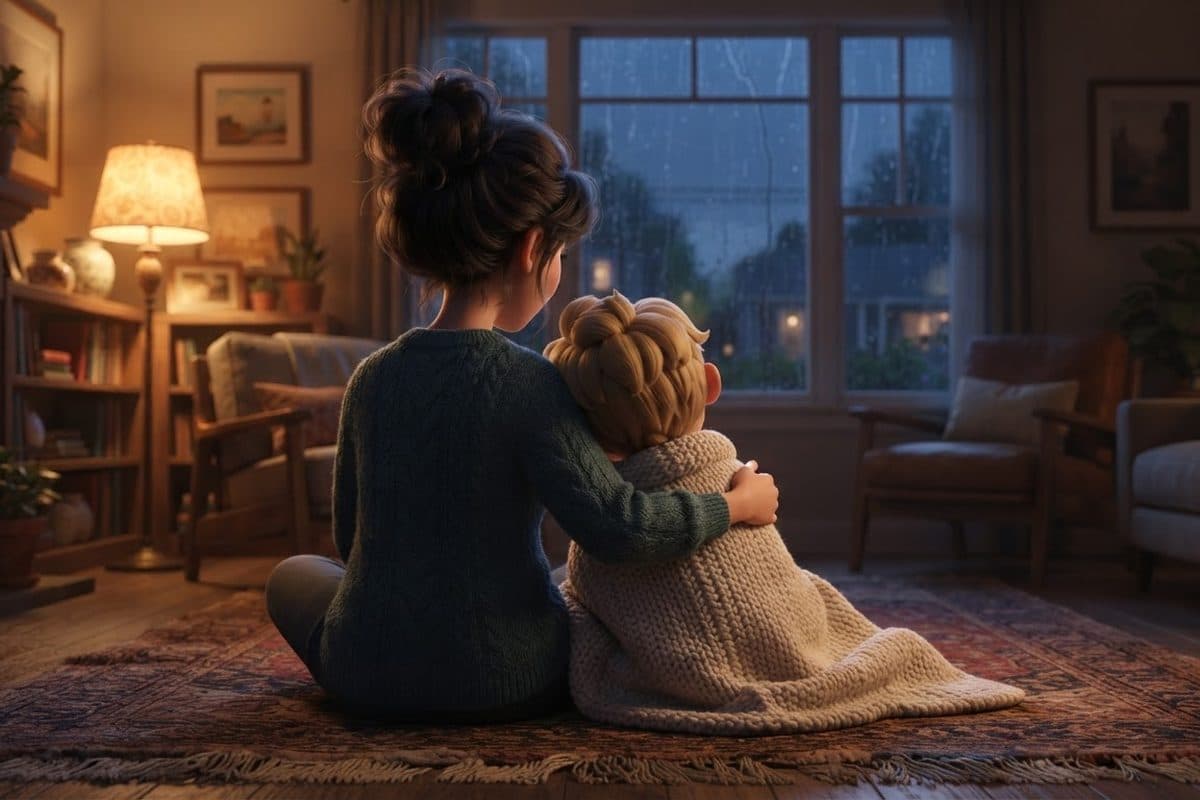
Many parents looking for books like Inside Out are not after more of the characters, although those exist and are covered below. They want what the film did at home: a small child pointing at a blue figure and saying, quietly, that is how I feel. A picture book can do that one feeling at a time, and you can stop on the page.
Many books about emotions for kids cover every feeling at once. This guide goes one at a time, the five from the first film and the four from Inside Out 2: what each looks like between three and eight, picture books that handle it well, each checked against its publisher's page or a trade review in September 2026, and one sentence you can say.
Then the official Disney books, how to read a feelings book so it helps, and where our own books fit. We make personalized picture books, so we are not neutral, and we say plainly which feelings we have nothing for.
Why Inside Out works so well on children
The first film, from Disney and Pixar in 2015, takes place inside the head of an eleven year old called Riley, where five feelings share the controls. Pixar's character notes give each one a job, and that is the first thing children take away: Anger is not a mood that happens to you, he is the part of you that cares about fair.
The second makes the film unusual. Joy spends most of it keeping Sadness away from everything, and it goes badly. The turn comes when Joy looks again at one of Riley's core memories, the day she missed a shot in a big hockey game, and sees that her sadness is what brought her parents and friends to comfort her. Dacher Keltner, the Berkeley psychologist who advised Pixar on both films, has made the same point: sadness sends us looking for comfort and pulls people closer.
Inside Out 2 followed in 2024, with Riley at thirteen, four new emotions and a bigger subject: how feelings build a sense of who you are. All nine, at a glance:
| Feeling | Its job in the films | What it can look like at 3 to 8 |
|---|---|---|
| Joy | Wanting every moment to be fun | Bouncing, shrieking, showing you now |
| Sadness | Signaling that comfort is needed | Going quiet, clinging, sudden tears |
| Fear | Watching for disasters | The dark, big dogs, the bath drain |
| Anger | Caring, loudly, about fair | That's not fair, then something thrown |
| Disgust | Keeping out anything poisonous, even socially | Yuck at dinner, socks that feel wrong |
| Anxiety | Preparing for what could go wrong | What if questions at bedtime |
| Envy | Wanting what anyone else has | The new baby, a friend's shoes |
| Embarrassment | Hiding at the first sign of awkwardness | Behind your legs, refusing to sing |
| Ennui | Boredom, with an eye-roll | I'm bored, at four in the afternoon |
A feeling with a face is also the idea behind our own children's books about feelings, except that the face is your child's, and the preview of your child as a character is free.
Joy: the feeling that wants to run everything
Joy is the optimist who wants every moment to be fun, and her mistake is trying to run all of it. At this age joy is loud and physical, and the less obvious part is that children notice early when the adults around them need them to be happy. A child who has learned that their sadness worries you may start performing joy for you.
- The Color Monster by Anna Llenas. A little girl helps a monster with mixed-up feelings sort them into jars, one color each: happiness is yellow and sadness is blue, which a child who knows the film will enjoy pointing out. If you buy one book from this page, this is the one that covers the most ground.
- Grumpy Monkey by Suzanne Lang, illustrated by Max Lang. Jim is in a terrible mood for no good reason, and all his friends' advice for cheering up only ends in a meltdown. It is Joy's lesson at picture book length: you cannot order someone to be happy.
Something you can say: "You're bouncing. That looks like happy. What was the best part?"
Sadness: the one the first film is really about
Sadness would often rather lie on the floor, and early on Joy admits she does not know what Sadness is for. By the end the audience does: she is how Riley gets comforted. In a small child sadness is often quiet. They go still, want to be carried, say nothing is wrong, or cry hard over something that looks small from above. The instinct, Joy's instinct, is to fix it fast.
- The Rabbit Listened by Cori Doerrfeld. Taylor's block tower is knocked down, and one animal after another arrives with a solution. The rabbit just sits close and listens, and that is what helps. It is on the feelings booklist of the American Academy of Pediatrics' early childhood council and Reach Out and Read, and it teaches the parent as much as the child.
- The Heart and the Bottle by Oliver Jeffers. A curious girl loses someone she loves and puts her heart in a bottle to keep it safe. It is for a real loss rather than a bad afternoon, so read it alone first.
Something you can say: "You're sad. That makes sense. I'll stay right here." Then stay.
Fear: the lookout who sometimes will not let them sleep
Fear is the lookout, scanning Riley's day for disasters. Children between three and six have plenty of fear for an ordinary reason: their imagination is suddenly strong enough to invent a shape in the corner, and their sense of what is real has not caught up.
- The Dark by Lemony Snicket, illustrated by Jon Klassen. The dark lives in Laszlo's basement, and one night it comes up and talks to him. Turning the frightening thing into a character is exactly what the film does, and this dark turns out to be useful.
- Jabari Jumps by Gaia Cornwall. A boy at the top of the diving board, a dad in no hurry, and a fear of something new rather than of the dark.
Something you can say: "Your fear is trying to keep you safe. Let's go and look at it together."
The dark has a full guide of its own, books for kids afraid of the dark, with what children's hospitals recommend. This is the book we wrote for it.
Anger: the one who cares about fair
Anger is the one who cares, loudly, about whether things are fair for Riley, and explodes when things do not go to plan. That is exactly what anger is at four. So many meltdowns open with that's not fair, and from where the child stands it is usually true. The anger is allowed. What it does with its hands is the part you are teaching.
- When Sophie Gets Angry... Really, Really Angry by Molly Bang. Sophie has to give up a toy to her sister, erupts, and runs out to sit in an old beech tree until the feeling passes. It shows the whole arc from explosion to calm, the part children never see from the outside.
- Ravi's Roar by Tom Percival. The smallest in his family gets so angry that he turns into a roaring tiger, then finds that nobody wants to play with a tiger. Honest about what anger costs, without making Ravi a bad child.
Something you can say: "You're really angry, and that's okay. I won't let you hit. You can stomp, or squeeze this pillow."
If the anger comes from being the smallest, as Ravi's does, our Smallest Knight is about that child: too small for the armor, and the one who solves what every tall knight could not, with a question instead of a sword. You can see your child drawn from one photo first.
Nemours KidsHealth suggests talking to your child's doctor if outbursts are getting more frequent, more intense or longer, or if your child often hurts themselves or others.
Disgust: yuck, and the first eye-roll
Disgust has the most underrated job in the film: keeping Riley away from anything poisonous, which Pixar says includes the social kind. In a small child it is mostly food, textures and socks that feel wrong, and around five or six the social version arrives: that show is for babies. Arguing with it rarely works. The books that help make trying something new a game instead of a test.
- Bread and Jam for Frances by Russell Hoban, illustrated by Lillian Hoban. Frances will only eat bread and jam, so her parents calmly serve it at every meal until she is the one asking for something else. It has lasted because it never shames the picky eater.
- I Will Never Not Ever Eat a Tomato by Lauren Child. Charlie gets his little sister Lola to eat by renaming everything on her plate as something from far away.
Something you can say: "You don't have to like it. You can say no thank you, and say it kindly."
Anxiety: the new one, and the one most parents noticed
Anxiety drives Inside Out 2, as UC Berkeley's write-up of the science behind it puts it, and her job is preparing Riley for whatever could go wrong. The film draws the line itself: Fear handles the scary things Riley can see, Anxiety the ones she cannot. She is no villain, and the trouble starts only when she takes the controls alone.
In a small child anxiety sounds like what if: what if you forget to pick me up, what if nobody sits with me. It comes at bedtime, or as a stomachache on school mornings.
- Ruby Finds a Worry by Tom Percival. Ruby's worry starts small and grows a little bigger every day, until she meets a boy with a worry of his own, they talk, and both worries shrink. It is on the American Academy of Pediatrics' feelings booklist too.
- Wemberly Worried by Kevin Henkes. A mouse who worries about everything, most of all the first day of school, until she meets another worrier there.
Something you can say: "That worry is loud tonight. Let's say it out loud, then make a plan for the morning."
What to avoid: clearing every worrying thing out of their way. A Yale psychologist quoted in Yale Medicine's guide for parents calls it the protection trap: steering a child away from whatever distresses them brings relief in the short term, and it also reinforces the anxiety.
Envy, Embarrassment and Ennui: the other three from Inside Out 2
These three are written for a thirteen year old, but a four year old has them all in smaller sizes.
Envy wants whatever anyone else has: the new baby, a friend's shoes. In Those Shoes by Maribeth Boelts, illustrated by Noah Z. Jones, Jeremy wants the shoes everyone at school wears, buys a thrift-shop pair that is too small, and ends up giving them to a friend. In Julius, the Baby of the World by Kevin Henkes, Lilly is sure her new brother is a disaster, until a cousin insults him and she leaps to his defense; more in books for a new big brother or sister. Try: "You really wish that was yours. That's a hard feeling."
Embarrassment would rather disappear inside his hoodie. At this age it is hiding behind your legs, refusing to sing, or crumbling after being laughed at. In Ish by Peter H. Reynolds, Ramon puts his pencil away after his older brother mocks a drawing, until his little sister shows him the almost right drawings she has been keeping. Giraffes Can't Dance by Giles Andreae, illustrated by Guy Parker-Rees, has Gerald laughed at on the dance floor until he finds his own music. Try: "Everyone gets embarrassed. It shrinks faster when you tell someone."
Ennui is boredom with an eye-roll. At four it is I'm bored, said at four in the afternoon, and boredom is often where play starts. In I'm Bored by Michael Ian Black, illustrated by Debbie Ridpath Ohi, a bored girl tries to convince a potato that children are interesting, and in Not a Box by Antoinette Portis a cardboard box is never just a box. Try: "Bored is allowed. I wonder what you'll come up with."
Boredom is also how our Waiting Kingdom begins: a rainy afternoon, a cold draft at the back of the wardrobe, and a kingdom that has waited a hundred years for your child. If that sounds like the child in your house, the free preview shows how they would look.
What Inside Out 2 is really about: a sense of self
Underneath, the sequel is about something parents of small children will recognize. Joy has been tending a sense of self that says Riley is a good person. Anxiety breaks it and tries to build a better one, and it comes out as the belief that Riley is not good enough. The ending settles for neither: a new sense of self grows that holds the good things Riley believes about herself and the hard ones, and only then does her panic attack ease.
Small children get there long before thirteen: I'm bad at drawing, nobody noticed, said flatly at bedtime. Arguing tends to fail, as we explain in books for a child who feels left out. What helps is closer to the film: evidence from things the child actually did.
That is the book we wrote. In The Light Behind You, a child who is sure nothing changes because of them walks through a castle that has been dark longer than anyone remembers, finds nothing, and gives up at the top. Then they lean on the black window, and at night a window is also a mirror: behind them, every room they walked through is lit gold.
What it is not: a story about your child's own life. The story is ours and the same for every family; what is yours is their face on every spread, their name in the words, and your dedication, printed word for word.
The official Inside Out books, for a child who wants Joy herself
Some children do not want books like Inside Out. They want Inside Out, with Joy on the cover, and for them the official Inside Out and Inside Out 2 books are the right choice. All four come from Random House's Disney imprints:
- Inside Out, the Little Golden Book of the first film, illustrated by Alan Batson, ages 2 to 5.
- Disney/Pixar Inside Out 2 Little Golden Book, adapted by Cynthea Liu, illustrated by Alan Batson, ages 2 to 5.
- Disney/Pixar Inside Out 2: Go to Sleep, Anxiety! by Luna Chi, illustrated by Gurihiru, ages 3 to 5. The emotions help Anxiety calm down at bedtime, which makes it genuinely useful for a worrier.
- Disney/Pixar Inside Out 2: The Junior Novelization by Tenny Nellson, for confident readers.
They retell the films rather than working on one feeling, which is fine: a child who loves the characters asks for them again. Nothing else on this page, ours included, is connected to Disney or Pixar.
If your child wants the licensed characters and their own name in one book, our guide to personalized Disney books covers who still sells them and what each lets you change.
How to read a feelings book so it actually helps
The best feelings books for kids still depend on how they are read. The method has a name, emotion coaching, and the American Academy of Pediatrics puts it in three steps: notice the feeling, name it and acknowledge it, then deal with what your child needs. What is missing is fixing it or talking them out of it. That is the rabbit's way.
- Read it on an ordinary day, not mid-meltdown. On a calm afternoon it is a rehearsal.
- Ask about faces, not lessons. How does Sophie feel here? Where would you feel that? A four year old can answer that. Nobody can answer what did we learn.
- Name your own feelings too. Children assume adults never feel any of this.
- Do not rush to the happy page. The film's whole argument is that the hard feeling has a job.
- Let them choose the color. After The Color Monster, ask which jar today was. Children who will not answer how was your day often answer that.
Why naming matters: ZERO TO THREE notes that naming feelings, and practicing ways to manage impulses, is how young children learn to do it themselves. In a UCLA brain-imaging study, adults who put a feeling into words showed a quieter response in the amygdala, the brain's alarm. Identifying your own emotions is part of self-awareness in CASEL's framework for social and emotional learning, and the Center on the Developing Child at Harvard counts managing one's feelings among the foundations of later learning, mental health and relationships.
The honest limit: a book gives a feeling words and company. It is not a treatment, and it does not replace your pediatrician when something is getting worse.
Why a child's own face in a feelings story helps
The film works partly because the feelings have faces, and a picture book can give the face to the child. Between about three and six, children struggle to carry a lesson from a character over to themselves. When the child on the page is unmistakably them, that step gets much shorter. The mechanism is in why kids love seeing themselves in books, and it rests on Rudine Sims Bishop's idea of books as mirrors and windows.
A child who has watched themselves be scared and look anyway has something closer to a memory than an example, and memories are what the second film says a self is made of. It only works if the likeness lands, so compare the drawing with the photo before paying for anything, ours included. The preview takes about thirty seconds, with no card or account.
Where our Big feelings books fit, and where they do not
We have drawn about ten thousand families since 2020, and our Big feelings shelf is five hardcover picture books of thirteen illustrated spreads, printed in the United States and checked by a real artist before printing. The stories are written in advance, the same for every family: your child is drawn from one photo in the look of a modern 3D animated film, with their name in the words and your dedication on its own page.
| If your child is struggling with... | A picture book to try | From our Big feelings shelf |
|---|---|---|
| Being scared of the dark | The Dark, by Lemony Snicket and Jon Klassen | The Bravest Night |
| Feeling that nothing they do makes a difference | Ish, by Peter H. Reynolds | The Light Behind You |
| Being the smallest | Ravi's Roar, by Tom Percival | The Smallest Knight |
| Saying they are not good at anything | Giraffes Can't Dance, by Giles Andreae | The Waiting Kingdom |
| Kindness that costs something | Those Shoes, by Maribeth Boelts | Kindness Is a Crown |
| Worries and what ifs | Ruby Finds a Worry, by Tom Percival | Nothing of ours: start with Ruby |
| Sadness | The Rabbit Listened, by Cori Doerrfeld | Nothing of ours |
| Anger | When Sophie Gets Angry... Really, Really Angry, by Molly Bang | Nothing of ours |
| Picky eating and yuck | Bread and Jam for Frances, by Russell Hoban | Nothing of ours |
In Kindness Is a Crown your child stops three times on the way to a race, arrives last, and finds that the small kindnesses were the only things that counted; the thinking is in books about kindness for preschoolers.
None of the five is about Riley, and none replaces a book in the middle column. For the wider picture, including when a bookstore is the better buy, see our guide to personalized books for kids. If one of the five fits the feeling in your house, start with one photo.
Sources
- Inside Out · Disney, 2015
- Inside Out 2 · Disney, 2024
- Inside Out · Pixar Animation Studios
- Inside Out 2 · Pixar Animation Studios
- How the GGSC Helped Turn Pixar Inside Out · Greater Good Magazine, UC Berkeley, 2015
- Four Lessons from Inside Out to Discuss With Kids · Greater Good Magazine, UC Berkeley, 2015
- UC Berkeley professor breaks down the science of Inside Out 2 · UC Berkeley News, 2024
- Recommended Reading: Books to Teach Kids About Feelings & Resilience · HealthyChildren.org, American Academy of Pediatrics and Reach Out and Read, 2025
- Helping Little People Manage Big Feelings · HealthyChildren.org, American Academy of Pediatrics, 2024
- Tips for Promoting Social-Emotional Development in Infants and Toddlers · ZERO TO THREE, 2024
- Putting Feelings Into Words Produces Therapeutic Effects in the Brain · UCLA Newsroom, 2007
- What Is SEL? · CASEL
- Children's Emotional Development Is Built into the Architecture of Their Brains (Working Paper 2) · National Scientific Council on the Developing Child, Harvard University, 2004
- Child Anxiety: A Guide for Parents · Yale Medicine, 2026
- Temper Tantrums · Nemours KidsHealth, 2022
- Inside Out: Parents' Guide and Movie Review · Common Sense Media, 2015
- Inside Out 2: Parents' Guide and Movie Review · Common Sense Media, 2024
- Film Ratings · Motion Picture Association
- Mirrors, Windows and Sliding Glass Doors · Rudine Sims Bishop, Perspectives, 1990
Questions parents ask
What books are like Inside Out?
Picture books that give one feeling a name and a face, the way the film does. Good starting points: The Color Monster by Anna Llenas for sorting feelings, The Rabbit Listened by Cori Doerrfeld for sadness, The Dark by Lemony Snicket for fear, and Molly Bang's When Sophie Gets Angry... Really, Really Angry for anger. For the Inside Out 2 feelings, try Ruby Finds a Worry by Tom Percival, Those Shoes by Maribeth Boelts and Ish by Peter H. Reynolds.
What is a good book about feelings for a 4 year old?
The Color Monster by Anna Llenas is a good first one, because it gives a four year old a color and a word for each feeling, and its publisher lists it for ages 4 to 8. After that, choose one book for whichever feeling is loudest in your house: The Rabbit Listened for sadness, When Sophie Gets Angry... Really, Really Angry for anger, Ruby Finds a Worry for worries, or The Dark for fear.
What books help kids understand their emotions?
The ones that name the feeling on the page, show it in a face or a body, let it pass instead of punishing it, and end with the child still themselves. Books that finish by explaining the lesson tend to get skipped. The American Academy of Pediatrics' early childhood council and Reach Out and Read publish a feelings booklist by age, and it includes The Rabbit Listened and Ruby Finds a Worry.
Is there an Inside Out book for kids?
Yes. Random House publishes Little Golden Book retellings of both films for ages 2 to 5, a picture book called Disney/Pixar Inside Out 2: Go to Sleep, Anxiety! by Luna Chi for ages 3 to 5, and a Junior Novelization of Inside Out 2 by Tenny Nellson for confident readers. For a child who wants Joy and Sadness themselves, those are the right books. The others on this page are about the feelings, not the characters.
How do I explain anxiety to a child, like in Inside Out 2?
Use the film. Anxiety is the part of you that plans for things that might go wrong. She means well, and she gets too loud when she is left alone at the controls. You do not have to get rid of her, you let the other feelings help. Ruby Finds a Worry by Tom Percival shows the same idea: a worry keeps growing until it is shared, and then it shrinks. If worries last for months and get in the way of daily life, talk to your pediatrician.
Why does Sadness matter in Inside Out?
Because Sadness is how Riley gets comforted. The turning point is Joy looking again at the memory of Riley missing a shot in a big hockey game, and seeing that her sadness is what brought her parents and friends to comfort her. Dacher Keltner, the Berkeley psychologist who advised Pixar, describes sadness as what sends us looking for comfort and draws people together. For a child the lesson is simple: a sad feeling said out loud is how help arrives.
What age is Inside Out for?
Both films are rated PG: the Motion Picture Association urges parents to give guidance, because a PG film may contain material they might not like for young children. Common Sense Media, a nonprofit that reviews children's media, suggests six and up for both. It flags an imaginary friend who fades away for good, a huge clown in a dream and Riley running away in the first film, and what looks like a panic attack in the second. With a three or four year old, watch together.
How do feelings books help children?
They give a feeling a name, which is the first step in handling it, and they let a child look at it from the outside while you sit next to them. The pediatricians' feelings booklist makes the case that reading about emotions helps children recognize their own and understand how other people feel, and that talking about feelings on a calm day prepares them for the stressful ones. They are not a treatment: if something is getting worse, the next step is your pediatrician, not another book.
What are the emotions in Inside Out 2?
Nine. The original five, Joy, Sadness, Fear, Anger and Disgust, plus four who arrive when Riley is thirteen: Anxiety, who prepares for everything that could go wrong; Envy, who wants what everyone else has; Embarrassment, who would rather hide; and Ennui, who is bored, with a practiced eye-roll. Nostalgia also pops in briefly, as a running joke. The film's point is that all of them together, not any one in charge, make up who Riley is.
Disney, Pixar, Inside Out, Little Golden Book and Random House are trademarks of their respective owners. Dreamtale Cartoons is an independent studio, not affiliated with, sponsored or endorsed by any of them.