
Choosing a book
Military Homecoming Ideas, Planned From the Kids' Side: The Countdown, the Day and the First Weeks
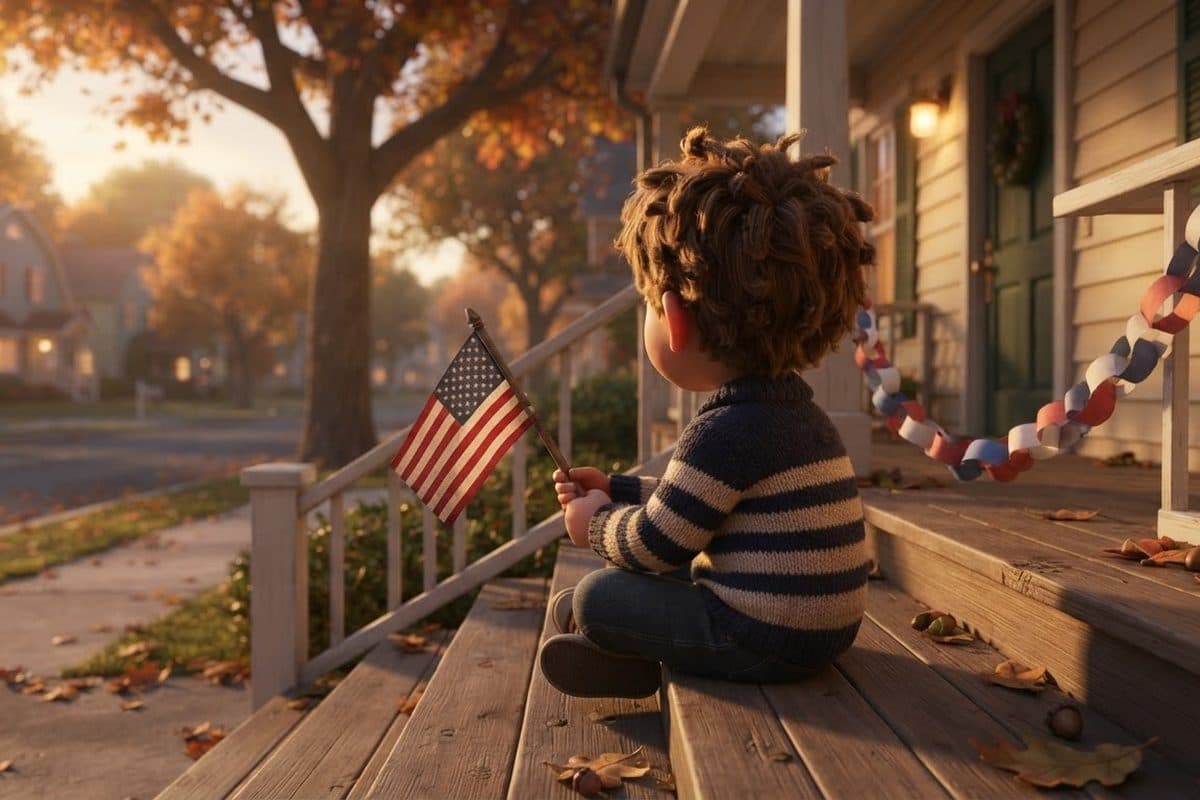
Most of the military homecoming ideas we found in October 2026 are written for the grown ups: the banner, the outfit, the clip filmed at the gate. The child is in the photo, usually holding a sign. But the child has also been measuring time in sleeps and birthdays, has grown since the goodbye, and is about to share a kitchen with someone who has changed too.
This guide plans a welcome home from deployment from the children's side, in three stages: the countdown, the day itself, and the first weeks after, which Military OneSource calls reintegration and which most of the lists we found never reach. It goes by age, from a toddler who may not know the parent at first to a teenager who has been running part of the house. The advice comes from Military OneSource, Sesame Street for Military Families, the American Academy of Pediatrics, Nemours KidsHealth and ZERO TO THREE, and where something is our own idea, we say so.
Two notes up front. Homecoming dates and times move, so nothing here depends on a promised day. And one idea is a book we make, My Hero, written for a dad coming home. If it is a mom, it is not the right one, and we say so where it comes up.
What are good military homecoming ideas for kids?
Good military homecoming ideas for kids are small, sized to the child's age, and still work if the date or the hour changes: a sign or a box the child makes, a countdown that counts days apart, a short and well-packed wait, and a first week with nothing scheduled. By age:
- Best for a baby or toddler: a handprint sign that a grown up holds, a photo album of the parent the child has been looking at all along, and a quiet first hour with no pressure to hug.
- Best for ages 3 to 5: a "while you were away" box the child fills with drawings and small things to show, and a paper chain with one link a day.
- Best for ages 6 to 12: a sign made of the child's own facts, a small job on the day, and one afternoon of one-on-one time planned for later in the week.
- Best for teens: a say in how the day goes, room afterward, and one thing planned for just the two of them.
Military OneSource says a thoughtful homecoming can be just as powerful as an elaborate one, and suggests asking the service member in advance how they want to celebrate. Earlier in the deployment? Our guide to books about deployment for kids covers the goodbye and the long middle.
Three stages, not one day: the countdown, the day and the first weeks
A homecoming has three parts for a child: the weeks of counting before, the day itself, and the weeks after, which Military OneSource calls reintegration. Reintegration is the longer process of settling back into daily routines, sorting out roles again and rebuilding connection, and Military OneSource is clear that it takes time.
Military OneSource's guide to returning home splits it into four phases. The last column is our reading of what each can look like to a child, not their wording.
| Phase | What Military OneSource says | What it can look like to a child (our reading) |
|---|---|---|
| Last days of deployment | The service member is finishing the mission and the family feels excitement and jitters. Talk with your partner about who should be at the first reunion. | Questions every hour, or a child who stops mentioning it at all. The countdown does its work here. |
| Reunion, the first few days | Everyone may be happy and excited, and also uncertain about changes. Talk about the feelings. | Joy at the door and a shy step back an hour later can happen on the same day. |
| Reintegrating, the first several weeks | Sometimes called disruption. It can feel awkward and stressful: communicate openly and be patient as routines and roles shift. | Bedtime, rules and who does what are renegotiated, and the child has the least say in it. |
| Normalization, several months to the first year | Families get reacquainted, renegotiate routines and find a new normal. | Ordinary days again, with the deployment as something that happened to everyone. |
Only the second row is the party, and the homecoming lists we found mostly stop there.
How do you count down to a homecoming when the date keeps moving?
Count what has happened, not what is promised. Sesame Street for Military Families suggests leaving the homecoming date as open-ended as possible while still giving the child something hopeful, and its tracking ideas, a paper chain or a coin jar, count the days apart. When the date moves, nothing on the wall turns out to be wrong.
Dates do move. Military OneSource says to stay flexible because travel or mission delays may alter reunion plans. A February 2011 Army article from Fort Hood quotes a family readiness support assistant telling families to expect delays and changes and not to make big plans because ceremony times change, and a Fort Campbell page, archived in 2016, said ceremony times could change up to two hours before the scheduled time. A child who was promised a particular day has no good way to hear that it slipped.
- Best for ages 2 to 4, the paper chain. Add a colorful link every day and let the child pick a word about the parent to write on it, as Sesame suggests. No end date is drawn anywhere.
- Best for ages 4 to 7, the coin jar. Drop in some change for every day the parent is away. Once everyone is home, it pays for something special for the parent or the whole family.
- Best for a child who likes to watch things move, two jars. A Fort Hood family in that 2011 article moved one marble a day from one jar to the other. Our tweak: if the date slips, add marbles to the first jar.
- Best for ages 7 and up, a mural. Sesame suggests a mural on butcher paper, added to every few days.
Keep the countdown at home: Military OneSource's operations security advice is not to share specific departure or return dates or the service member's location, and to help children understand what is okay to share. And if you would rather the waiting end in a story than a date, the book near the end of this guide opens on a calendar with the days crossed off. You can see your child drawn beside their dad, free first.
Military homecoming signs kids can make
A good homecoming sign says something only this child could say, is light enough to carry through a long wait, and leaves off anything operational. Skip the slogan from a search result and use the child's own facts. Five that work for children:
- The height sign, best for ages 3 to 8. A tall strip of paper with two marks: how tall the child was at the goodbye and how tall they are now. Sesame notes that in a few months a child can grow an inch or move up a grade, and a strip shows it faster than a sentence.
- The list sign, best for ages 6 to 12. Three things I learned, two things I saved, one thing I want to show you. Let the child choose the numbers.
- The door sign, best for ages 3 to 6. A drawing of your own front door, open. Easy to draw, readable across a room, and what a small child has been waiting to see.
- The handprint sign, best for babies and toddlers. A handprint or footprint on a board that a grown up holds. A toddler will not hold a sign through a wait.
- The home sign, best when the base is far away or closed to visitors. A sign on the front door, the mailbox or the car. A Fort Campbell page archived in 2016 described a restricted access post where everyone over 16 needed photo ID, so a welcome at home may be the one everybody sees.
Signs are an old homecoming habit: the 2011 Fort Hood article describes a family readiness group social where spouses made signs to welcome the Soldiers home. What to leave off: the date, the places the parent has been, the unit and anything about the mission. A name and a drawing are enough. And ask what you may bring: that archived Fort Campbell page allowed balloons in the hangar but not on the flight line. Your unit's family readiness contact has your list.
What is a military homecoming day really like for a child?
A homecoming day can be mostly waiting, then a few minutes together. A Fort Campbell ceremonies page, archived in 2016, told families to arrive at least two hours early and described a three to five minute ceremony and a 15 minute reunion, after which the soldiers left to turn in their equipment.
That was one large Army installation in 2016, and other units may run theirs differently, so ask your unit's family readiness contact for the real schedule. The same page said flights may land early, ceremonies would not be delayed for family members, volunteers would have free beverages and snacks, and there was plenty of seating. Families then got a short reintegration briefing and picked their soldier up later at the unit area. A plan that suits a child, built on that shape (the list is ours):
- The bag. Water, snacks the child actually eats, a change of clothes, one quiet toy and wipes.
- One job. Holding the sign, handing over the drawing or carrying the box. A child with a job is less likely to freeze at the big moment.
- One exit. A named adult who leaves with the child if the crowd is too much. Say it before the day, so stepping back is part of the plan, not a failure.
- One sentence for the first minute. "You can hug, wave or just look. All three are okay." Sesame suggests letting each child reconnect at their own speed.
- A short day. Military OneSource advises avoiding overscheduling, to leave time for rest, reconnection and downtime. Go home, eat something ordinary, go to bed on time.
What should you wear to a military homecoming, and which swag is worth keeping?
Wear what you can wait in for hours and be hugged in: comfortable shoes, layers, nothing that needs adjusting. The person coming home is looking for faces, not outfits. Swag photographs well, but the pieces worth keeping are the ones a child made or that carry a story.
This is our practical advice, not a rule from any source; the sourced parts are small: the Fort Campbell page archived in 2016 said to arrive two hours early and limit what you carry, since families rode buses and hand-carried their belongings, and the American Academy of Pediatrics says a t-shirt with a deployed parent's photo on it can help a child feel close during the deployment, so one is worth saving to wear again on the day.
- Best for the photos: matching shirts for the children, a small flag, a sign.
- Best for the child to keep: the handprint board, the paper chain, the height strip, a box of drawings. KidsHealth suggests starting a scrapbook of artwork, pictures and report cards for when the parent is back.
- Best to skip: anything scratchy or tight for a baby, costumes that run hot, and anything the child will fight at hour two.
By age: what to expect at a homecoming and what helps
Expect something different at each age: a baby or toddler may be unsure who the returning parent is, a preschooler may act younger, a school-age child may worry or feel it in the body, and a teen may show anger or want room. These are reactions to a big change, not a judgment on the parent or the child.
The age-by-age symptom lists come mainly from the AAP, which wrote them for deployment stress; the AAP adds that a child's stress may increase, not fade, once the parent is home. Military OneSource says every child responds differently, so read the table as a menu, not a forecast. The first-hour plan is ours.
| Age | What you may see | What helps | Where it comes from |
|---|---|---|---|
| Babies and toddlers | Not sure who the returning parent is, overwhelmed by the excitement, clingier, crying or sleeping differently. | Keep the baby's schedule, let the baby warm up, and have the returning parent help with bathing and feeding. | ZERO TO THREE, Military OneSource, AAP |
| Preschoolers, 3 to 5 | Acting younger, such as slipping back on potty training, new fears like monsters under the bed, clinginess or aggression. | A plan for the first hour, a photo album of the parent from the deployment, and the child sets the pace. | KidsHealth, AAP, Sesame, ZERO TO THREE |
| School age, 6 to 12 | Worry that the parent will be hurt, stomachaches or headaches, baby talk or bedwetting. | One-on-one time for each child, an honest word about what changed, and a reminder that the parent changed too. | AAP, Military OneSource, Sesame |
| Teens, 13 to 17 | Anger that the parent had to leave, new household responsibilities, more self-reliance. | Time and space, questions asked without judgment, and one activity planned for the two of them. | AAP, KidsHealth, Military OneSource |
What if a toddler does not recognize their parent, or a preschooler goes quiet?
Yes, a toddler can be unsure who a returning parent is. ZERO TO THREE notes that infants and toddlers grow considerably during a deployment, and when the parent returns a child can be confused and anxious. Plan a slow first hour: the parent gets low and still, a familiar adult stays close, and the hug waits for the child.
Sesame suggests that a shy child watch the parents hug first, and that each child take as long as they need to reconnect. Military OneSource says not to be disappointed if a baby does not bond right away, since a homecoming's excitement can overwhelm a baby, and to keep the baby's schedule and hold off on trips. Our reading: that rules out "go give Mommy a hug". ZERO TO THREE also suggests keeping letters, photos and artwork where a young child can explore them before and after the return.
A preschooler may look fine at the door and show it later: the AAP says a child's stress can rise after the return, and KidsHealth lists slipping back on potty training and new fears among the ways young children react to a parent's military absence. Bring routines back in pieces: Military OneSource advises stepping up the returning parent's part in meals, bedtime, play and discipline over time. Our suggestion for bedtime is to let the returning parent sit in the room first and read the story a few nights later. The bedtime routine that ends the stalling has a four step version.
For a four year old who keeps asking what is happening, a story with the parent in it gives the reunion a shape to look at from the outside. There is one below: try the preview with one photo of each of them, about half a minute per face.
School-age children and teens: they grew while the parent was away
School-age children and teens have grown while the parent was away, and the parent has changed too. For ages 6 to 12, give each child one-on-one time and an honest picture of what is different. For teens, give time, space and questions asked without judgment.
Sesame suggests reminding children before the day that just as they have changed, so has the parent, who has been somewhere new and had new experiences. Military OneSource suggests time for each child, such as the zoo, ice cream or a favorite sport, and new traditions like a pizza or board game night. KidsHealth notes that the kids are older and may have new interests, and that everyone may be more self-reliant.
For teens, Military OneSource's teen guide says to give them time and space to readjust, to ask about their life and listen without judgment, starting with topics you enjoyed during the deployment, and to tell them that intense emotions at a reunion are normal, especially if the return was delayed. The AAP lists anger that the parent had to leave and new household responsibilities among what teens are dealing with. Our suggestion: talk about which jobs change hands instead of announcing it.
The first weeks: reintegration after deployment, at a child's size
Keep the first weeks small, slow and predictable: routines first, parties later. Military OneSource calls the first several weeks back together "disruption" and advises avoiding overscheduling and communicating openly. KidsHealth says the early days together may be rocky, and that expecting everyone to act or feel a certain way only makes it harder.
- Keep the days ordinary. Military OneSource's reintegration advice is to leave time for rest, reconnection and downtime.
- Hand back the routine in pieces. Military OneSource's deployment cycle guide tells the returning parent to stay close to home in the first days and weeks and avoid big changes, and tells the parent who stayed not to dump every chore on the returning partner.
- Let the sadness stay. Sesame says sadness, anger, anxiety or confusion can remain after the parent is back, and to comfort the child as often as needed. The awkward phase passes, it says, and how long it takes may depend on how long the parent was away.
- Expect months, not weeks. Military OneSource describes normalization as taking several months or the first year.
The reunion titles in books about deployment for kids are listed under homecoming and after, and its section on reintegration covers the weeks after the party.
A book about a dad coming home, with your child and their dad in it
Dreamtale Cartoons, a small studio that has drawn about ten thousand families since 2020, makes My Hero, a personalized hardcover in which your child and their Dad are both drawn from your photos, in the look of a modern 3D animated film. It is written in rhyme across thirteen illustrated spreads, for ages 4 to 12.
The story opens in a kitchen, on a calendar stuck to the fridge with a red pen on a string and a square crossed off every night. Then, on a Tuesday at twenty past four, the door opens and Dad is standing there in his boots. The child asks where he was. He sits down on the floor and tells a story about a soldier sent far away, who kept one creased photograph in his breast pocket. Before the last page the child has worked out who the soldier is. No war is named, no weapon appears and nobody is hurt.
Why draw both of them? As why kids love seeing themselves in books explains, children between about three and six carry a lesson from a character over to themselves poorly, and a book where the character is unmistakably them shortens that step. No study shows it removes it.
What it is not: a book for a mom coming home. The story is a dad's, so if it is a mom, this is not the right one, and our deployment guide lists books that picture mothers, one of them a reunion story. The story is ours and the same for every family. Yours are the two faces, your child's name, the word they use for Dad, and the dedication you write, printed word for word after the story. The uniform is plain on purpose, olive green with no badges, rank or flag, since a photo cannot tell us his unit. One clear photo of his face is enough, in uniform or not. How these books work is in our guide to personalized books for kids.
The story names no return date, and the door opens on a Tuesday with no warning, so a date that moved does not spoil it. Every book is printed after you order it, and the book page and the cart show the real delivery dates before you pay. To see whether the two of them look like themselves, upload a photo of each: no card and no account.
When should a family ask for more help after a homecoming?
Ask for help when a child's reactions seem extreme, last a long time or keep getting worse, or when fear for the parent's safety is all the child can think about. The American Academy of Pediatrics lists those signs and names a military support group, a military physician, your pediatrician or a mental health professional as places to start.
Military OneSource offers free, confidential counseling at 800-342-9647. Family counseling is available for children 6 to 12 with a parent in the session, teens 13 to 17 can take part with a parent present at the start of each session to give consent, and the Military and Family Life Counseling Program can support children under 18 with a parent's written consent. For urgent mental health support, including thoughts of suicide, domestic violence or child abuse, call the Military Crisis Line at 988, then press 1, or text 838255.
If the returning parent has been injured or has a condition like PTSD, KidsHealth says therapy may help the kids too, giving everyone a safe way to share feelings.
Sources
- Returning Home From Your Deployment · Military OneSource, 2026
- Understanding Predeployment to Reunion and Reintegration · Military OneSource, 2025
- Supporting Your Children Through the Deployment Cycle · Military OneSource, 2024
- Helping Teens Deal With Deployment · Military OneSource, 2026
- Parenting Through Deployment · Military OneSource, 2026
- Deployments · Sesame Street for Military Families, Sesame Workshop
- Military Homecomings · Sesame Street for Military Families, Sesame Workshop
- Effects of Deployment on Children & Families · HealthyChildren.org, American Academy of Pediatrics, 2019
- Helping Your Family Cope With Military Deployment · Nemours KidsHealth, 2024
- Deployment and Coming Home: The Realities for Infants and Toddlers in Military Families · ZERO TO THREE, 2009
- Supporting Your Child While a Parent Is Deployed · ZERO TO THREE, 2007
- Families prepare to welcome home III Corps troops · U.S. Army, Fort Hood Sentinel, 2011
- Welcome Home Ceremonies · Fort Campbell and the 101st Airborne Division (Air Assault), archived copy at the University of North Texas Web Archive, 2016
Questions parents ask
What are some good military homecoming ideas?
Ideas a child can take part in and that survive a changed date: a sign made from the child's own facts, a countdown that counts days apart, a well-packed wait with one job for the child and one exit for a meltdown, and a quiet first week. Military OneSource says a thoughtful homecoming can be as powerful as an elaborate one, and suggests asking the service member how they want to celebrate.
What should you wear to a military homecoming?
None of the sources we opened prescribes an outfit, so this is our advice: comfortable shoes and layers for a wait of two hours or more, nothing that needs adjusting, and clothes a child can be hugged against. A shirt with the parent's photo on it suits the children, since the AAP says such shirts can help a child feel close to a deployed parent. Check your unit's rules on what you may bring.
What are some good military-themed swag ideas for a homecoming?
For the photos, matching shirts, a small flag or a sign. For keeping, the things a child made: a handprint board, a paper chain with a word on each link, a strip showing how tall they grew, or a box of drawings and report cards, the kind of things KidsHealth suggests collecting in a scrapbook for when the parent is back. Skip anything scratchy or hot, since the wait can be long.
How do you prepare kids for a parent's homecoming?
Tell them in simple words what to expect: the day may be long, the date may move, the parent has changed as they have, and the first weeks can feel strange. Sesame Street for Military Families suggests reminding children before the day that just as they have grown, the parent has been somewhere new. Keep routines steady, and let each child set their own pace on the day.
What should a military homecoming sign say?
Something only this child could say: their height at the goodbye and now, three things they learned, a drawing of your own front door. Leave off the return date, the places the parent has been and the unit. Military OneSource advises families not to share specific return dates or locations, and to help children understand what is okay to share. A name and a drawing are enough.
How long does it take a family to adjust after a deployment?
Military OneSource describes the first several weeks as disruption, which can feel awkward and stressful, and normalization as taking several months or the first year. Sesame says the awkward phase passes and that how long it takes may depend on how long the parent was away. A child who warms up a little more each week is moving the right way, whatever the calendar says.
Why is my child acting out now that their parent is home?
Coming home is a big change too. The American Academy of Pediatrics says a child's stress may actually increase when the parent returns, one reason being that a child can hold back from getting close to avoid the pain of saying goodbye again. Sesame says sadness, anger, anxiety or confusion can remain after the return. Keep routines steady, comfort often, and ask for help if the reactions are intense, drag on or keep getting worse.
What if the homecoming date changes?
Plan on it. Military OneSource says travel or mission delays may alter reunion plans, and a Fort Campbell page archived in 2016 warned that ceremony times could change up to two hours before the scheduled time. Tell the child what Sesame suggests: the parent will be home as soon as the job is finished. A countdown made of days already passed, like a paper chain, survives a changed date.
Should a child surprise a parent at a homecoming?
Ask the service member first. Military OneSource's advice is to talk about the reunion in advance, ask how they want to celebrate, and decide with your partner who and how many people should be at the first reunion. A surprise can still work at home: a drawing taped to the front door or a sign on the porch waiting when the family walks in.
Sesame Street and ZERO TO THREE are trademarks of their respective owners. Dreamtale Cartoons is an independent studio, not affiliated with, sponsored or endorsed by any of them.